By SHANGHAI MATRIX INDUSTRIAL GROUP CO., LTD. / Bronze Machining / 9 min read
Aluminium Bronze (QAl9-4) Machining and Forging: Properties, Tolerances, and Applications
For procurement managers, metallurgical engineers, and importers comparing suppliers, QAl9-4 is an aluminium bronze and a high-strength, corrosion-resistant bronze alloy for parts that must survive sliding wear
Quick Answer
For procurement managers, metallurgical engineers, and importers comparing suppliers, QAl9-4 is an aluminium bronze and a high-strength, corrosion-resistant bronze alloy for parts that must survive sliding wear, seawater exposure, or heavy mechanical load. Aluminium bronzes offer high strength, excellent corrosion resistance, and good resistance to wear and
Key Takeaways
- Strength and ductility: Tensile strength rises with aluminium content and β-phase, while ductility drops.
- Corrosion resistance: Self-healing aluminium oxide film supports excellent corrosion resistance.
- Machining target: Common CNC tolerance ±0.02 mm and surface roughness Ra 0.8–1.6 µm.
- Forging and heat treatment: Open-die forged rings; solution annealing near 900°C and aging near 600°C are typical RFQ starting points.
For procurement managers, metallurgical engineers, and importers comparing suppliers, QAl9-4 is an aluminium bronze and a high-strength, corrosion-resistant bronze alloy for parts that must survive sliding wear, seawater exposure, or heavy mechanical load. Aluminium bronzes offer high strength, excellent corrosion resistance, and good resistance to wear and fatigue. The sourcing decision is not only about chemistry. It also depends on whether the supplier can machine to the required tolerances, produce sound open-die forged rings, run a controlled heat treatment, and provide inspection evidence that supports the quoted properties.
Key procurement takeaways
| Decision factor | What to specify or verify | Buyer evidence to request |
|---|---|---|
| Alloy family | QAl9-4 is in the copper–aluminium alloy group of bronze alloys. | Mill certificate showing actual composition, not only trade name. |
| Strength and ductility | Tensile strength rises with aluminium content and β-phase, while ductility drops. | Tensile, yield, elongation, and hardness values for the exact product form. |
| Corrosion resistance | Self-healing aluminium oxide film supports excellent corrosion resistance. | Application-specific confirmation for moving seawater or aggressive media. |
| Machining target | Common CNC tolerance ±0.02 mm and surface roughness Ra 0.8–1.6 µm. | CMM inspection report and profilometer readings. |
| Forging and heat treatment | Open-die forged rings; solution annealing near 900°C and aging near 600°C are typical RFQ starting points. | Furnace charts, ultrasonic test report, and final mechanical test results. |
| Application focus | Marine and heavy-duty bearing service where wear, corrosion, and strength matter. | Supplier experience with comparable bearing or marine components. |
1. QAl9-4 in the Bronze Alloy Range
QAl9-4 is not a brass. In copper alloy classification, bronze covers copper–tin, copper–aluminium, copper–silicon, and copper–beryllium alloys; brass is the copper–zinc group. Copper–aluminium alloys are also treated as a distinct engineering subject within copper alloy processing, separate from copper–tin alloys and other bronze families.
Convert the short designation QAl9-4 into a complete purchase specification. Request the supplier’s full standard, exact composition limits, residual element controls, and product form. Do not source solely by trade name.
Aluminium bronzes are relevant where conventional bearing bronze may not provide enough strength or corrosion resistance. They offer high strength, excellent corrosion resistance, and good wear and fatigue resistance. Tensile strength increases with increasing β-phase while ductility falls, and increasing aluminium content increases tensile strength. For a 10% Al aluminium bronze, tensile strength can range from 300 to 680 MPa. That spread matters: do not accept one “typical” tensile number without knowing the exact composition, processing route, and heat treatment condition.
The relationship between aluminium content and mechanical properties in Cu-Al bronze is material-specific. A supplier should be able to explain where its QAl9-4 material sits on that curve and what it means for yield strength, elongation, and machinability.
2. Material Properties That Drive Supplier Selection
The short form al bronze is common shorthand for aluminium bronze; QAl9-4 belongs to this family. Its main design advantage is the combination of mechanical strength, corrosion resistance, and wear/fatigue resistance.
The self-healing aluminium oxide film is a key technical point. It supports excellent corrosion resistance. That makes QAl9-4 a candidate for marine and heavy-duty bearing applications where the component is exposed to corrosive environments and must retain dimensional stability under load. Still confirm the specific operating conditions: seawater temperature, flow velocity, galvanic coupling, lubricant type, and load pattern.
The main metallurgical trade-off is strength versus ductility. Higher aluminium content and a higher β-phase fraction can improve tensile strength but reduce ductility. If the buyer specifies only tensile strength, a supplier may offer a high-strength condition that is too brittle for impact or assembly stress. The RFQ should include elongation and, where relevant, impact or hardness limits.
| Property trend | Reported effect | Sourcing check |
|---|---|---|
| Increasing aluminium content | Increases tensile strength. | Specify minimum aluminium range and required tensile/elongation. |
| Increasing β-phase | Tensile strength increases, ductility drops. | Require elongation and, if relevant, impact value. |
| Aluminium oxide film | Self-healing surface supports corrosion resistance. | Confirm suitability for the actual service medium. |
| 10% Al tensile strength | Reported range 300–680 MPa. | Do not accept an unqualified “high strength” claim; request exact condition. |
3. CNC Machining: Tolerance and Surface Finish Requirements
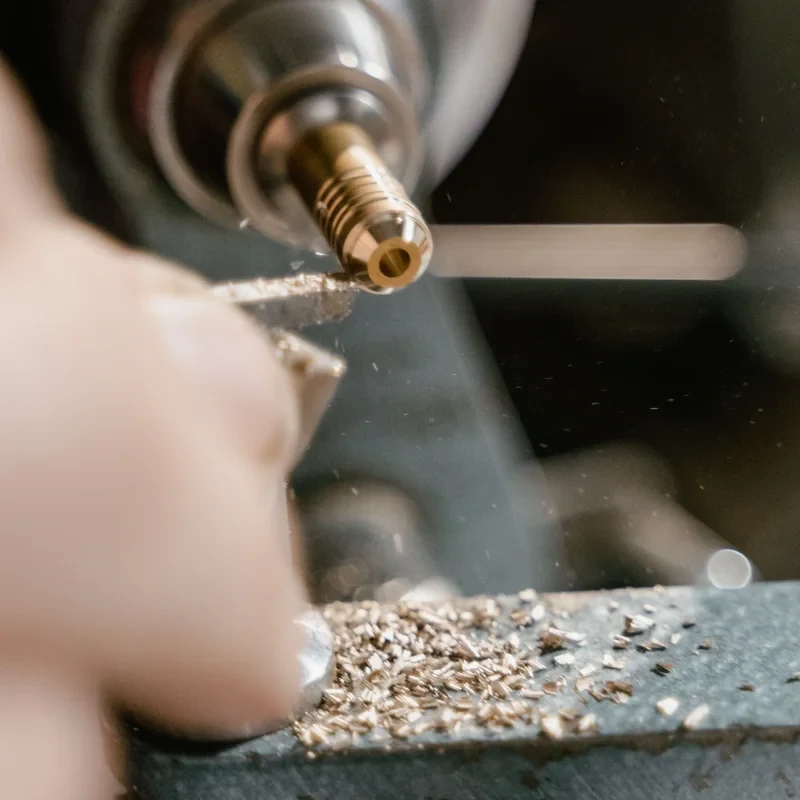
Many procurement packages for machined QAl9-4 components target ±0.02 mm on critical diameters and Ra 0.8–1.6 µm on bearing surfaces. Treat these values as RFQ targets, not universal capabilities. Aluminium bronze is not a free-cutting leaded brass; results vary with composition, tooling, coolant, and workpiece rigidity.
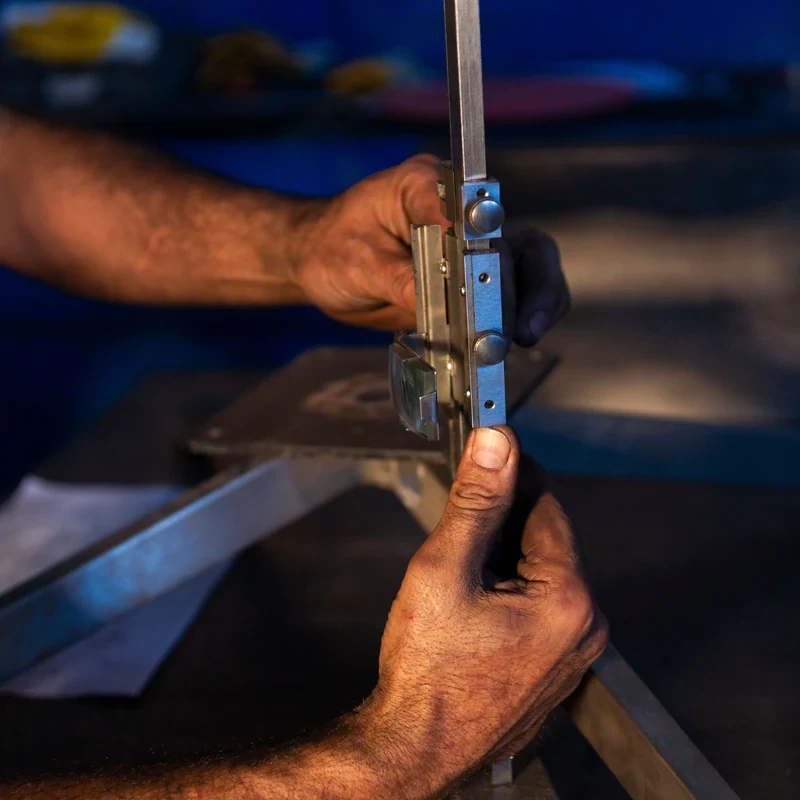
Ask for evidence specific to aluminium bronze. A generic shop capability statement is not enough. Request first-article dimensional inspection reports, CMM data on bores and outer diameters, and profilometer readings where surface finish matters. For bushings, rings, or bearing components, separate functional surfaces from non-functional surfaces: a blanket Ra 0.8 µm callout can raise cost without improving performance.
Practical machining RFQ points:
- Define drawings with GD&T callouts, not loose notes such as “high precision.”
- State whether ±0.02 mm applies to all features or only to bearing bores, seal diameters, and mating faces.
- Require the supplier to confirm tooling, chip control, and edge break for the actual QAl9-4 batch.
- Ask for a dimensional report with actual values, not pass/fail tags.
- Check whether stress-relief or intermediate machining steps are planned before final finishing for stable precision work.
| Feature to control | Common target to confirm | Inspection evidence |
|---|---|---|
| Bearing bore or OD | ±0.02 mm | CMM report or calibrated bore gauge |
| Functional surface finish | Ra 0.8–1.6 µm | Profilometer or equivalent |
| Edge condition | Chamfer or edge break per drawing | Visual or optical inspection |
| Batch repeatability | First article and in-process checks | SPC or recorded inspection data |
4. Open-Die Forged Rings and Heat Treatment Controls
For QAl9-4 rings in heavy-duty bearing and marine assemblies, open-die forging is often specified to improve structural integrity over a fully cast blank. Specify product form clearly: as-forged, rough-machined, or finish-machined. The supplier should state the starting material type, minimum forging reduction ratio, and whether the ring will be hot worked, solution annealed, and aged.
Solution annealing near 900°C followed by aging near 600°C is a common RFQ starting point for QAl9-4 heat treatment. These temperatures are grade- and product-form-sensitive, not universal. Require furnace charts showing actual soak temperature, time at temperature, quench delay or cooling method, and furnace batch number. For high-value bearing rings, heat treatment records matter as much as the material certificate.
Forged ring inspection should include:
- Ultrasonic testing of the forged blank or rough-machined ring.
- Dimensional checks of ID, OD, wall thickness, and height.
- Hardness testing after heat treatment.
- Tensile or proof testing where required by the purchase order.
- Visual and surface defect inspection after machining.
Because the tensile range for aluminium bronze is wide, link the requested mechanical properties to the heat treatment route. A supplier should state the strength, elongation, and hardness range expected from the proposed forging and heat treatment cycle.
5. Marine and Heavy-Duty Bearing Applications
QAl9-4 aluminium bronze is often evaluated for marine and heavy-duty bearing service because it combines high strength, excellent corrosion resistance, and good wear and fatigue resistance. The self-healing aluminium oxide film supports corrosion resistance in environments that would attack many other copper alloys.
Aluminium bronze can replace conventional copper–tin bearing bronze when the application requires higher mechanical strength or better corrosion performance. Substitution should still be justified by an engineering review. Ask:
- What are the mating shaft or journal material and hardness?
- What are the peak load, sliding speed, and lubrication condition?
- Is the environment seawater, brackish water, chemical exposure, or intermittent dry running?
- Does the component need impact resistance or only compressive load capacity?
- What clearance and surface finish does the bearing design require?
Because increasing β-phase can reduce ductility, do not over-specify strength without checking elongation. A high-strength QAl9-4 condition may suit a heavily loaded bushing but not a thin ring subjected to press-fit or thermal cycling.
6. RFQ Checklist for Bars and Forged Rings
Importers and OEM buyers should include the following in a QAl9-4 RFQ:
Material and standards
- Complete grade designation and applicable supplier standard.
- Chemical composition limits for copper, aluminium, and residual elements.
- Product form: round bar, hollow bar, sleeve, or open-die forged ring.
- Required heat treatment condition: solution annealed, aged, or stress relieved.
Mechanical properties
- Tensile strength, yield strength, elongation, and hardness.
- The reported property basis: as-cast, forged, annealed, or aged.
Dimensions and machining
- Drawings with tolerances; note whether ±0.02 mm applies to critical features.
- Surface roughness Ra 0.8–1.6 µm on functional surfaces if required.
- Quantity, lot size, and first-article requirements.
Forged ring-specific
- Ring dimensions: OD, ID, wall thickness, height.
- Forging ratio and starting blank type.
- Ultrasonic testing acceptance criteria.
- Heat treatment route; solution annealing near 900°C and aging near 600°C if required, subject to supplier confirmation.
Inspection documents
- Mill test certificate or material certificate.
- Dimensional inspection report.
- Surface roughness report.
- Hardness and tensile test results.
- Ultrasonic test report for forged rings.
- Certificate of origin and packing list for export.
Do not accept
- A general statement that the supplier “can do precision machining” without measured data.
- Heat treatment without furnace charts or batch traceability.
- A single hardness value without the testing location and method.
- A quoted tensile strength without elongation or condition.
7. FAQ: QAl9-4 Aluminium Bronze Sourcing
What is QAl9-4 aluminium bronze and how does it compare with tin bearing bronze?
QAl9-4 is an aluminium bronze in the copper–aluminium alloy group of bronze alloys. Aluminium bronzes have high strength, excellent corrosion resistance, and good wear and fatigue resistance. Compared with some conventional copper–tin bearing bronze grades, QAl9-4 may be selected when higher strength or better corrosion resistance is needed. Confirm exact composition and mechanical properties with the supplier before substitution.
Can QAl9-4 be machined to ±0.02 mm and Ra 0.8–1.6 µm?
These values are common RFQ targets for precision aluminium bronze parts, not universal machine shop capabilities. Request CMM and surface roughness data from the actual QAl9-4 batch. Because aluminium bronze is a high-strength bronze alloy, process validation matters more than a generic capability statement.
What heat treatment should be requested for QAl9-4 forged rings?
A common starting point is solution annealing near 900°C followed by aging near 600°C. These parameters are grade-specific and should be confirmed with the supplier. Require furnace charts, quench delay or cooling records, hardness results, and final tensile/elongation data.
What inspection documents should importers require for bars and forged rings?
Request at minimum the mill test certificate with chemical composition, mechanical test results, dimensional inspection report, surface roughness report, and hardness data. For forged rings, add an ultrasonic test report and heat treatment records. For export orders, also require certificate of origin and packing list.
Send your QAl9-4 machined part or forged ring RFQ with the full grade, drawing, tolerances, heat treatment condition, and target quantity. Request material test certificates, CMM data, surface roughness readings, and ultrasonic test reports where applicable. For marine or heavy-duty bearing service, state the load, lubrication, and corrosion environment so the supplier can confirm the correct aluminium bronze condition and processing route.
FAQ